Through the Lens and onto the Plate: A Photographic Feast in France’s Loire Valley
Wandering through the Loire Valley feels like stepping into a living postcard—rolling vineyards, fairytale châteaux, and village markets bursting with color. But what truly stole my heart wasn’t just the scenery—it was the food, photographed at golden hour, served on rustic tables, and shared with locals who pour passion into every dish. If you’ve ever wondered how cuisine and photography can tell a destination’s soul, this is your moment. Trust me, you’ve never seen French country life like this.
Framing the Valley: Where Photography Meets Terroir
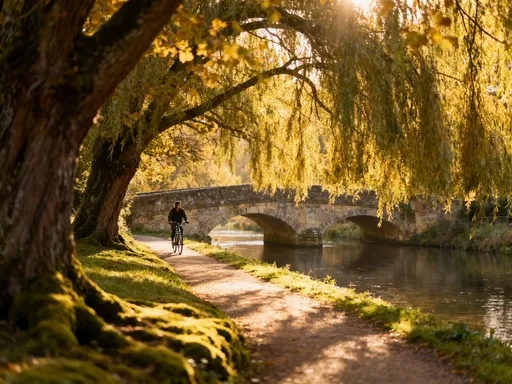
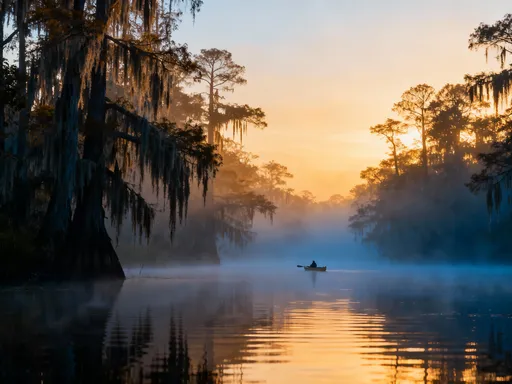
The Loire Valley, stretching across central France along the country’s longest river, is more than a picturesque escape—it is a landscape shaped by centuries of harmony between people and place. Designated a UNESCO World Heritage site for its cultural and agricultural significance, the region offers photographers a canvas of ever-changing light, texture, and seasonal rhythm. Each bend in the Loire River reveals a new composition: mist curling above water at dawn, sunlit treetops framing a distant château, or rows of vines glowing in the late afternoon. But beyond the grand vistas lies a quieter, more intimate story—one written in soil, scent, and sustenance.
This is a region where terroir is not just a culinary term but a way of seeing. The word, often used to describe how environment shapes wine, extends naturally to photography here. The chalky soil of Sancerre imparts minerality to sauvignon blanc—and also reflects light in a way that softens shadows on a summer afternoon. The damp riverbanks nurture wild herbs that flavor local dishes and add green contrast to food photos. Even the weather plays a role: spring brings soft, diffused light perfect for capturing dew on strawberries at a roadside stand, while autumn’s low sun sets vineyard rows ablaze in amber, ideal for portraits of harvesters with baskets of Chenin blanc grapes.
What makes the Loire Valley exceptional for visual storytelling is how seamlessly the landscape feeds the table. A single frame can contain both the origin and the outcome: a patch of sunlit earth where asparagus grows, moments later transformed into a dish drizzled with butter and sprinkled with chives. This continuity—from soil to plate, from field to lens—creates a narrative depth that few destinations offer. Photographers don’t just capture beauty; they document a cycle of care, seasonality, and craftsmanship that defines rural French life.
The Art of Shooting Food in the Wild (Market Edition)
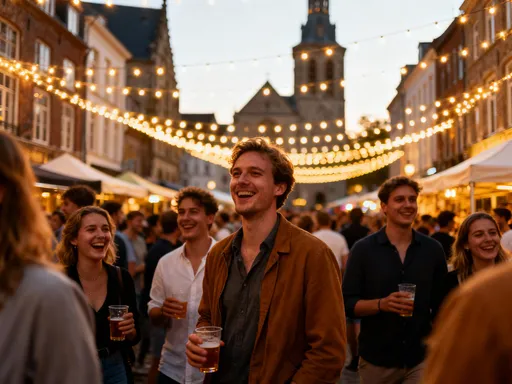
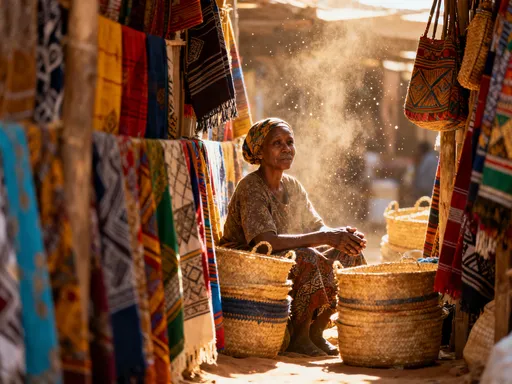
If the Loire Valley is a stage for culinary theater, its village markets are the open-air performances that draw both locals and visitors into the rhythm of daily life. Every Saturday morning, towns like Blois, Amboise, and Saumur come alive with stalls arranged like still-life paintings—pyramids of ripe cherries, baskets of artichokes with violet-tinged leaves, wheels of goat cheese rolled in herbs, and jars of lavender honey glistening in the sun. These markets are not curated for tourists; they are working spaces where food is bought, sold, and celebrated with quiet pride.
For photographers, these markets offer unmatched opportunities to capture food in its most authentic context. The key is timing. Arriving early—between 7:30 and 9:00 a.m.—ensures clean compositions before crowds gather and produce gets handled. Morning light, especially in spring and early summer, is soft and directional, casting gentle highlights on textures. Backlighting, when the sun rises behind a stall, can turn a simple bunch of radishes into a study in translucency, their pink skins glowing against dark earth still clinging to their roots.
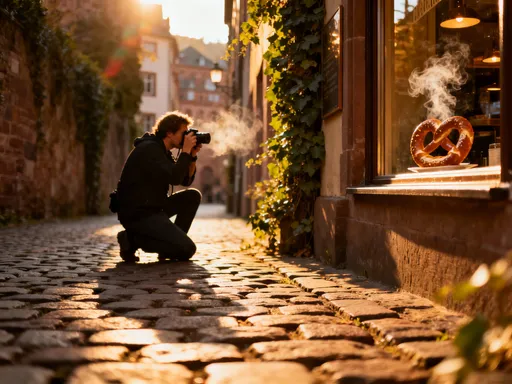
One of the most powerful lessons I learned was that the best shots often come from interaction, not intrusion. Asking permission with a polite “Est-ce que je peux prendre une photo?” not only respects the vendor but often leads to richer moments. A cheesemonger in Amboise, seeing my interest, carefully unwrapped a fresh bûche de chèvre from its paper, letting me photograph the ash-dusted rind and creamy interior. A baker in Blois smiled as she handed me a warm pain au chocolat, allowing me to capture the steam rising in the cool air. These gestures transformed passive observation into shared experience—and the resulting images carry that warmth.
Composition in market photography thrives on details. Instead of wide shots of entire stalls, focus on hands—wrinkled and strong—arranging figs or weighing olives. Capture the contrast of a red-checked tablecloth against a slate-gray tray of pâté. Look for patterns: rows of quail eggs in cartons, jars of confit duck gizzards lined up like amber jewels. These elements, when framed with care, tell stories of tradition, labor, and local taste without a single word.
Château Kitchens and Country Tables: Dining with a View
While many travelers come to the Loire Valley for its architectural splendors—the soaring towers of Chambord, the elegant symmetry of Chenonceau—few realize that some of the most memorable experiences unfold behind kitchen doors. In family-run châteaux tucked into the countryside, a quieter, more intimate form of heritage is preserved: the art of seasonal, estate-grown cuisine. These are not formal dining rooms with white gloves and prix-fixe menus, but long wooden tables set under grape arbors, where meals unfold slowly, accompanied by laughter and local wine.
At a 17th-century estate near Tours, I was invited to dinner in a garden courtyard where the chef grows heirloom vegetables in raised beds just steps from the kitchen. The meal began with a terrine of rabbit and pistachio, served with cornichons and a slice of toasted baguette. As the sun dipped behind the château’s stone walls, the main course arrived: duck confit with a morel cream sauce, roasted baby carrots, and a glass of Vouvray that caught the last golden light. Photographing this moment was not about perfection—it was about presence. The slightly uneven table, the crumpled linen napkin, the flicker of candlelight in the wine—all of it contributed to a sense of authenticity that studio shots could never replicate.
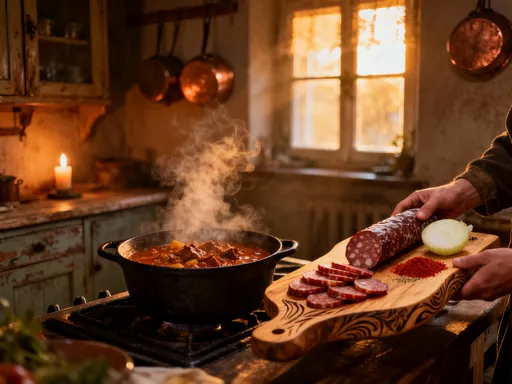
What struck me most was how every ingredient had a name and a story. The duck came from a farm five kilometers away; the morels were foraged by the chef’s brother in a nearby forest; the honey was harvested from hives on the estate’s south-facing slope. This transparency, this connection to place, is what makes Loire Valley cuisine so compelling to photograph. The visual contrast of ancient architecture and simmering pots adds drama—a copper pot on a cast-iron stove against a stone fireplace, or a bowl of soup steaming beside a leaded window—but the emotional resonance comes from knowing the hands that prepared it.
These meals are not performances for guests. They are lived traditions, passed down through generations. In photographing them, the goal is not to flatter, but to honor. A slightly out-of-focus background of climbing roses, the shadow of a wine glass on a wooden table, the crease in a chef’s apron—all become part of a larger narrative about continuity, care, and the quiet joy of sharing food in a place where time moves differently.
The Golden Hour Rule: When Light Makes the Meal
In photography, light is not just a tool—it is the medium. And in the Loire Valley, the most transformative light arrives reliably each day: the golden hour. Lasting roughly 30 to 45 minutes before sunset, this period bathes the landscape in a warm, diffused glow that enhances color, softens contrast, and adds depth to every image. For food photography, it is nothing short of magical. A simple charcuterie board, ordinary in midday sun, becomes cinematic when the late light grazes the surface of a saucisson sec, highlighting the marbled fat and the texture of a crusty baguette.
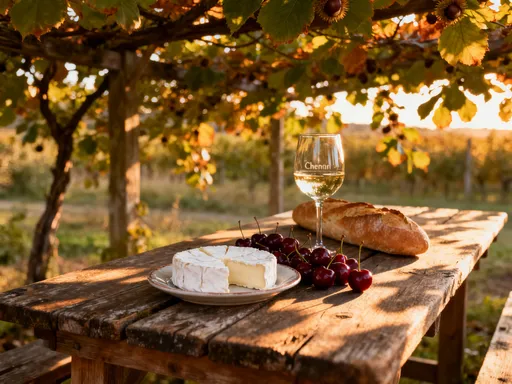
I learned to plan meals around this window. In late June, golden hour begins around 6:00 p.m., long enough after lunch that appetites return, but early enough to dine outdoors. At a farmhouse in the Touraine region, I set up a shot of a picnic-style spread on a stone terrace overlooking a vineyard. The composition included a wheel of Sainte-Maure goat cheese, a jar of cornichons, a glass of rosé, and a sprig of thyme placed just so. As the sun dipped lower, the light turned from yellow to amber, then to a deep honeyed gold. Using a 50mm prime lens at f/2.8, I captured shallow depth of field, letting the cheese remain sharp while the vineyard blurred into a dreamy backdrop.
Equipment played a supporting role, not the lead. A small reflector—no larger than a notebook—bounced light gently onto the shadowed side of the bread, eliminating harsh contrasts without looking artificial. A polarizing filter reduced glare on the wine glass, ensuring the liquid’s color remained true. But the real secret was patience. I waited for the exact moment when the sun aligned with the edge of the terrace, casting a diagonal beam across the table. That single ray illuminated the thyme sprig, making it glow like a tiny torch. The resulting image wasn’t just a record of food—it was a moment of atmosphere, a sensory memory preserved in pixels.
Golden hour also transforms portraits of people with food. A winemaker holding a glass of Sancerre, backlit by the setting sun, becomes a silhouette edged in gold. A grandmother placing a tart tatin into the oven, her face lit from below by the oven’s glow, radiates warmth and wisdom. These images linger not because of technical precision, but because they capture mood—what the French call l’ambiance. In the Loire Valley, where life unfolds at the pace of ripening fruit, golden hour is more than a photographic opportunity. It is a daily ritual, a reminder to pause, to savor, to see the ordinary as extraordinary.
Behind the Scenes: Baking, Foraging, and Local Encounters
Some of the most powerful photographs are not taken at the table, but in the moments that lead to it. In the Loire Valley, I sought out experiences that placed me alongside the people who grow, gather, and prepare food. One morning, I joined a baker in the village of Levroux, known for its stone ovens and slow-fermented sourdough. Inside a centuries-old bakery, the air was thick with the scent of rising dough and wood smoke. Flour dusted every surface, including the baker’s forearms as she shaped a pain de campagne. I crouched low, using natural light from a high window, and captured the moment her hands pressed into the dough—a study in strength, rhythm, and care.
Later that week, I accompanied a local farmer on a foraging trip along the banks of the Cher River. The goal: wild garlic, or ail des ours, a pungent green that appears in spring and is used in pestos, soups, and omelets. The forest floor was damp, sunlight filtering through new leaves, and the garlic grew in lush patches, their broad leaves glistening with morning dew. As the farmer knelt to cut the leaves, I focused on the details: the green blades against dark soil, water droplets clinging to the edges, the shadow of her hand holding a bundle. These images felt intimate, not because they were close-ups, but because they revealed a relationship—between person and place, between knowledge and season.
Such moments require more than a camera. They demand presence, humility, and trust. The baker didn’t need me to praise her bread; she wanted someone to witness her craft. The forager didn’t seek credit; she shared her knowledge freely, explaining which plants were safe, which to avoid. In return, I offered attention—quiet, respectful attention. I didn’t rush shots. I waited for natural gestures: the flick of a wrist as dough was flipped, the tilt of a basket as garlic was poured into it. These unposed moments, when people are absorbed in their work, carry a truth that staged images rarely achieve.
Back home, when I review these photographs, I don’t just see ingredients. I see the hands that shaped them, the land that nourished them, the seasons that governed them. That, perhaps, is the deepest lesson of food photography in the Loire Valley: the meal is only the final act. The real story unfolds in the quiet labor that comes before.
Gear That Works (Without Being Obvious)
One of the most liberating realizations during my time in the Loire Valley was that powerful images do not require elaborate equipment. In fact, the opposite is often true: the simpler the gear, the more present you become. My kit was modest—a mirrorless camera, a 50mm f/1.8 prime lens, a small diffuser, and a lightweight sling bag. No tripod, no drone, no studio lights. In narrow market alleys, crowded cafés, or intimate kitchens, discretion was essential. A bulky setup would have drawn attention, created barriers, and disrupted the natural flow of moments worth capturing.
The 50mm lens, often called the “nifty fifty,” proved ideal. Its field of view mimics human vision, creating images that feel natural and immersive. At wide apertures (f/1.8 to f/2.8), it produced beautiful background blur—perfect for isolating a cheese platter from a busy market scene. At smaller apertures (f/8 to f/11), it delivered sharp detail across a table setting. The fixed focal length encouraged me to move, to compose with intention, rather than rely on zooming. This physical engagement often led to better framing and more thoughtful shots.
Quiet operation was another priority. I used silent shutter mode to avoid drawing attention in quiet spaces—like a village bakery at dawn or a family dinner in progress. Quick composition was key. Instead of adjusting settings constantly, I pre-set my camera for typical lighting conditions: ISO 400 for overcast mornings, ISO 100 for golden hour, aperture priority mode to maintain control over depth of field. This allowed me to raise the camera and shoot in seconds, capturing fleeting expressions or passing light.
A polarizing filter was invaluable for managing reflections on glossy surfaces—wine glasses, glazed tarts, or the surface of a duck rillettes jar. By rotating the filter, I could reduce glare and enhance color saturation without post-processing tricks. A small diffuser, folded into my bag, helped soften harsh midday sun when shooting outdoors. But perhaps the most important “tool” was not in my bag at all: it was the ability to wait. Some of my best images came from sitting still, observing, and letting the scene unfold. A vendor arranging strawberries, a child reaching for a macaron, a dog napping under a market stall—these unscripted moments are the soul of travel photography.
Why This Journey Stays With Me
This journey through the Loire Valley did more than fill my memory card—it reshaped my understanding of what travel photography can be. It is not about collecting landmarks or chasing perfect light at famous châteaux. It is about tuning into the rhythm of a place: the pace of a market morning, the quiet focus of a baker at dawn, the shared silence of a family meal as the sun sets. In this region, where food is grown, prepared, and enjoyed with deep intention, I discovered that cuisine and imagery are not separate arts. They are intertwined, each enhancing the other.
Looking back at my gallery, I don’t just see dishes or views. I see the pride in a cheesemaker’s eyes as she turns a wheel of chèvre. I see the concentration on a forager’s face as she identifies wild herbs. I see the warmth of a shared bottle of wine passed around a wooden table. These are not just photographs—they are echoes of connection, moments of grace preserved in light and shadow.
The Loire Valley taught me that the most meaningful images are not taken from a distance, but from within. They require curiosity, patience, and respect. They ask us to slow down, to listen, to taste, to engage. If you go, bring your camera—but more importantly, bring your presence. Ask questions. Share a smile. Accept an invitation to dinner. Let the light guide you, but let the people teach you. Because in the end, it is not the châteaux or the vineyards that stay with you. It is the quiet art of living well—and the courage to capture it, not as a spectator, but as a participant.