How Strength Training Changed My Recovery Game for Good
What if the key to lasting recovery wasn’t rest, but movement? After a long rehab journey, I discovered that strength training wasn’t just about building muscle—it rebuilt my confidence, stability, and resilience. It wasn’t fast, but over time, the right exercises transformed my body’s ability to heal and adapt. This is what actually worked when I stopped waiting to get better and started training to stay better. While many believe healing means stillness, science and personal experience now show that controlled, progressive movement can be one of the most powerful tools in recovery. For women in their 30s to 50s—often juggling family, work, and personal health—this shift in mindset can be life-changing. This article explores how strength training became the cornerstone of a deeper, more sustainable recovery, backed by both evidence and lived experience.
The Breaking Point: When Rest Wasn’t Enough
For nearly nine months after a lower back injury, the routine was the same: ice, rest, gentle stretches, and occasional pain medication. At first, the approach made sense—avoid aggravating the injury, let the body heal. But as weeks turned into months, progress stalled. Simple tasks like lifting a grocery bag or bending to tie a shoe remained painful. Physical therapy helped, but after six weeks of passive treatments, the improvements plateaued. There was no clear next step, no roadmap beyond “take it easy.” The frustration grew. I began to wonder: was healing supposed to feel this slow? Was I destined to live with a fragile back forever?
The turning point came during a routine check-up. When I asked my physiotherapist why I still couldn’t stand for more than 20 minutes without discomfort, she didn’t suggest more rest. Instead, she asked, “Have you tried strengthening the muscles around your core and hips?” That question shifted everything. For the first time, I considered that maybe rest wasn’t the full answer. Maybe my body wasn’t broken—it was underused. The idea of strength training felt counterintuitive at first. Wouldn’t lifting weights or doing resistance exercises make the injury worse? But her explanation was clear: targeted, progressive loading could actually stimulate healing, not hinder it. That moment marked the beginning of a new approach—one focused not on protection, but on empowerment.
Rethinking Recovery: Why Strength Isn’t the Enemy
One of the most persistent myths in recovery is that injured areas must be shielded from stress. While acute injuries do require initial protection, prolonged inactivity can do more harm than good. Modern rehabilitation science now emphasizes the importance of **controlled loading**—applying gradual, measured stress to tissues to promote repair and adaptation. Tendons, ligaments, muscles, and even bones respond positively to this kind of stimulus. When loaded appropriately, they become denser, more resilient, and better able to handle daily demands.
Think of the body like a bridge. If a support beam is weakened, engineers don’t just isolate it—they reinforce it. They apply controlled stress during testing to ensure it can bear weight again. The human body works similarly. When a muscle or joint is injured, complete rest may reduce pain temporarily, but it also leads to atrophy, stiffness, and decreased blood flow. Strength training, when done correctly, reverses these effects. It increases circulation to injured areas, delivering oxygen and nutrients essential for healing. It also promotes collagen alignment in healing tissues, which improves structural integrity. Over time, this process builds a stronger, more functional version of the original tissue.
For women managing long-term recovery, this shift in perspective is crucial. It moves the focus from passive waiting to active participation. Instead of asking, “What should I avoid?” the question becomes, “What can I safely do today to support healing?” This mindset doesn’t dismiss pain or encourage pushing through injury—it promotes intelligent, guided movement as a form of medicine. And for many, especially those dealing with chronic pain or recurring issues, it offers a path forward when traditional methods have failed.
The Long Game: What “Long-Term” Really Means in Rehab
Recovery is often misunderstood as a short-term event—a phase to endure until you’re “back to normal.” But true healing, especially after a significant injury, is a long-term process measured in months or even years. This reality can be discouraging, particularly in a culture that values quick fixes. Yet, sustainable progress isn’t about dramatic breakthroughs; it’s about consistency, patience, and recognizing small victories along the way.
For me, long-term recovery meant redefining success. Instead of focusing on when I could run again or lift heavy objects, I began tracking subtle improvements: less morning stiffness, improved posture, the ability to walk for 30 minutes without discomfort. These changes didn’t happen overnight. Some days, progress felt invisible. But over time, the accumulation of small gains built a foundation of resilience. I learned to celebrate non-scale victories—like sleeping through the night or playing with my children without pain—because they signaled real, functional improvement.
Equally important was accepting that short-term discomfort could lead to long-term freedom. Mild soreness after a new exercise wasn’t a sign of failure; it was often a signal of adaptation. The key was distinguishing between harmful pain and productive discomfort—a skill developed through self-awareness and gradual progression. This long-term view reduced pressure and anxiety. It allowed me to focus on the process rather than the outcome, knowing that each session contributed to a stronger, more capable body. For women managing household responsibilities and personal health, this sustainable approach is not just effective—it’s realistic and empowering.
My First Moves: Starting Small Without Fear
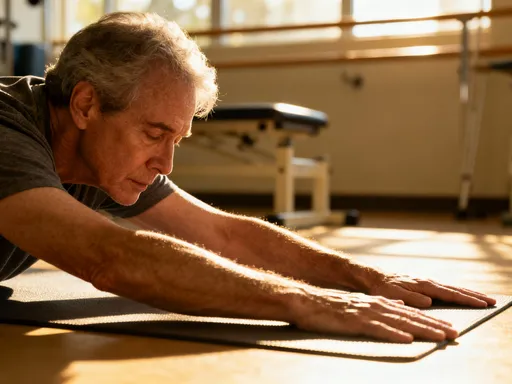
Beginning strength training after an injury can feel intimidating, especially without access to a coach or gym. My first steps were simple, low-risk exercises designed to rebuild neuromuscular connection and confidence. I started with bodyweight squats—standing in front of a chair, lowering slowly until I lightly touched the seat, then standing back up. This movement helped retrain my hips and glutes without straining my back. I also used resistance bands for gentle leg abductions and seated rows, focusing on form and control rather than resistance.
Isometric holds were another cornerstone of my early routine. I would press my hand against a wall and hold the position for 20–30 seconds, engaging my core and shoulders without joint movement. These static contractions helped activate weakened muscles and improve stability. To monitor intensity, I used the “talk test”—if I could speak in short sentences without gasping, the effort was appropriate. I also tracked pain using a simple 0–10 scale, staying below a 3 during exercises. If pain increased afterward, I reduced the load or volume the next session.
Form was non-negotiable. Without a trainer, I relied on mirrors, smartphone videos, and reputable online resources to check my alignment. I prioritized slow, controlled movements over speed or reps. This attention to detail prevented compensation patterns—where stronger muscles take over for weaker ones—and ensured that the targeted areas were actually doing the work. Over time, these small, consistent efforts built a movement foundation that made more advanced exercises possible. The message was clear: starting small wasn’t a limitation—it was a strategy.
Progress, Not Perfection: Building a Routine That Stuck
As my confidence and strength grew, I transitioned from isolated rehab exercises to structured strength workouts. I began training two to three times per week, focusing on compound movements that engaged multiple muscle groups. Goblet squats with a light dumbbell improved hip and core strength. Floor presses—lying on my back and pressing a weight upward—allowed me to build upper body strength without straining my lower back. Step-ups onto a low platform strengthened my legs and improved balance, a critical factor in injury prevention.
Consistency was more important than intensity. I followed a simple weekly plan: lower body on Mondays, upper body on Wednesdays, and a full-body session on Saturdays. Each workout lasted 30–40 minutes, making it manageable alongside family and work responsibilities. I tracked progress not by how much weight I lifted, but by how my body felt. Did I have more energy? Was my posture better? Could I carry laundry baskets without wincing? These non-scale victories became my motivation.
Sleep quality improved, likely due to the physical exertion and reduced pain levels. Joint confidence—the feeling that my body could handle daily tasks without fear—was perhaps the most significant change. I no longer braced myself before bending or avoided stairs. This sense of reliability transformed my relationship with movement. The routine wasn’t perfect—some weeks were missed due to illness or travel—but the overall trend was upward. The key was flexibility and self-compassion, not rigid adherence. For women managing busy lives, this adaptable approach made long-term commitment possible.
Science Meets Experience: How Strength Supports Healing
The benefits of strength training extend far beyond muscle growth. From a physiological standpoint, resistance exercise enhances recovery through multiple mechanisms. First, it increases blood flow to muscles and connective tissues, delivering essential nutrients and removing metabolic waste. This improved circulation accelerates tissue repair and reduces inflammation. Second, strength training stimulates collagen production and alignment in tendons and ligaments, making them more resilient to future strain.
Neuromuscular re-education is another critical benefit. After an injury, the brain often “forgets” how to properly activate certain muscles. Strength training helps re-establish these neural pathways, improving coordination and movement efficiency. This is especially important for preventing compensatory patterns that can lead to secondary injuries. For example, weak glutes may cause the lower back to overwork during daily activities—a common contributor to chronic pain. Strengthening the correct muscles restores balance and reduces strain on joints.
Research supports these findings. Studies have shown that progressive strength training reduces the risk of musculoskeletal relapse by improving joint stability and functional capacity. One review published in the British Journal of Sports Medicine found that resistance exercise significantly reduced pain and improved function in individuals with chronic lower back pain. Another study demonstrated that tendon injuries healed more effectively when combined with controlled loading protocols. These outcomes aren’t limited to athletes—they apply to everyday individuals seeking sustainable recovery. For women navigating the physical demands of caregiving, household management, and aging, strength training offers a scientifically backed path to long-term health.
From Rehab to Resilience: A New Relationship with My Body
Perhaps the most profound change wasn’t physical—it was emotional. For years, I viewed my body as fragile, something to be protected and managed. Pain was a warning sign to stop, not a signal to adapt. Strength training shifted that narrative. Each successful workout, each new milestone, reinforced a new belief: my body was not broken. It was capable, adaptable, and strong.
This shift in mindset had ripple effects. I became more confident in daily life—more willing to try new activities, more resilient in the face of physical challenges. I stopped fearing movement and began trusting it. Strength training wasn’t just about recovery; it became a form of prevention. By building a stronger foundation, I reduced the likelihood of future injuries. It also became a source of empowerment—a way to take control of my health in a world where so many factors feel beyond our influence.
For women in midlife, this sense of agency is invaluable. As metabolism slows, muscle mass declines, and responsibilities mount, maintaining physical resilience is not a luxury—it’s a necessity. Strength training offers a proactive way to age with strength and independence. It transforms rehab from a temporary phase into a lifelong foundation. The journey isn’t about achieving perfection or lifting heavy weights. It’s about moving with purpose, building confidence, and honoring the body’s remarkable ability to heal and grow.
Strength training didn’t just help me recover—it redefined what recovery could be. It turned passive healing into active rebuilding, teaching me that long-term resilience comes not from avoiding stress, but from mastering it. This journey wasn’t about lifting heavy; it was about moving well, consistently, with purpose. For anyone stuck in rehab limbo, the answer might not be more rest—but the right kind of effort. Always consult a healthcare professional, but don’t fear movement. Sometimes, the strongest medicine is the one you build yourself.