How I Started Feeling Like Myself Again With Simple TCM Tweaks
For years, I felt constantly drained—like I was running on 30% battery no matter how much I slept. I didn’t realize how out of balance my body was until I gave traditional Chinese medicine (TCM) a real try. It wasn’t about quick fixes, but small, consistent adjustments that actually stuck. This is how I optimized my health the gentle, natural way—and why I’ll never go back.
The Wake-Up Call: When Fatigue Became Impossible to Ignore
There was a time when getting through the day felt like climbing a mountain with no summit. Even after eight hours of sleep, I would wake up groggy, my mind foggy and my body heavy. Mornings started with a sense of dread, not energy. Digestive discomfort became routine—bloating after meals, irregular bowel movements, and a persistent feeling of fullness no matter how little I ate. Mood swings crept in too: moments of irritability over small things, followed by waves of low motivation that made even simple household tasks feel overwhelming.
I tried everything that conventional advice offered. I set a strict bedtime, cut down on screen time, drank more water, and even took supplements recommended by friends. I reduced caffeine and avoided late-night snacks. Yet nothing brought lasting relief. The fatigue wasn’t just physical—it seeped into my emotional well-being, making me feel disconnected from myself and the people around me. I began to accept this as normal, a side effect of being a busy adult juggling work, family, and personal responsibilities.
The turning point came during a routine check-up when my doctor found nothing medically wrong. Blood tests were within normal ranges. There was no thyroid issue, no anemia, no hormonal imbalance. I was labeled “healthy” on paper, yet I felt anything but. That’s when I began to question whether the Western medical model, focused on diagnosing disease, was equipped to address subtle imbalances before they became serious. It was then that a close friend gently suggested I look into traditional Chinese medicine—not as a replacement for modern care, but as a complementary way to understand what my body was trying to tell me.
Approaching TCM for the first time, I was skeptical. Terms like Qi, meridians, and spleen deficiency sounded mystical, even outdated. But I kept an open mind. What intrigued me most was TCM’s holistic view: the body as an interconnected system where emotions, digestion, sleep, and energy levels are all linked. Unlike the symptom-by-symptom approach I was used to, TCM looked at the whole picture. It didn’t ask, “What’s wrong with you?” but rather, “How has your system fallen out of balance?” That shift in perspective was the first step toward reclaiming my well-being.
Understanding Balance: What “TCM Adjustment” Really Means
At the heart of traditional Chinese medicine is the idea of balance—specifically, the dynamic equilibrium between Yin and Yang, and the smooth flow of Qi, the vital life force that moves through the body. In TCM, health isn’t just the absence of disease; it’s the continuous state of harmony within. When Qi flows freely and the organs function in sync, we feel energized, calm, and resilient. When that flow is blocked or depleted, symptoms arise—not as isolated problems, but as signals of deeper imbalance.
One of the most helpful metaphors I learned was comparing the body to a garden. A garden doesn’t thrive because of one single action—like watering once or adding fertilizer in a crisis. It flourishes through consistent care: removing weeds, watering at the right time, ensuring sunlight reaches all areas, and planting according to the season. In the same way, TCM adjustment isn’t a quick fix or a one-time treatment. It’s an ongoing process of tending to your inner ecosystem. Just as a neglected garden becomes overrun with weeds, a body ignored through poor diet, irregular sleep, and chronic stress will eventually show signs of disharmony.
The concept of Qi took some getting used to. At first, it felt abstract—how could an invisible energy influence digestion or mood? But over time, I began to recognize Qi in tangible ways. When I felt sluggish after a heavy meal, I learned that my spleen Qi was weakened. When I felt anxious and restless at night, I understood that my heart and liver Qi were agitated. TCM organ systems don’t function exactly like their anatomical counterparts; they represent broader functional patterns. For example, the TCM “spleen” governs digestion and the transformation of food into energy, while the “liver” regulates the smooth flow of Qi and emotions.
What surprised me most was how prevention is central to TCM. Rather than waiting for illness to appear, the goal is to maintain balance before symptoms escalate. This preventive mindset was a revelation. I had spent years reacting to fatigue, treating it with coffee or naps, instead of asking why it kept showing up. TCM encouraged me to see my body not as a machine to be pushed, but as a living system that requires rhythm, nourishment, and rest. With this new understanding, I stopped chasing quick energy boosts and began making small, intentional changes to support my body’s natural wisdom.
Diet as Daily Medicine: Eating With the Seasons
One of the most transformative shifts came from rethinking food—not as fuel or indulgence, but as daily medicine. In TCM, diet is one of the most powerful tools for restoring balance. What we eat directly influences Qi production, organ function, and internal temperature. I began to see that my lifelong habits—drinking ice-cold water, eating large salads for lunch, snacking on raw fruits in the evening—might be contributing to my fatigue and digestive issues.
TCM classifies foods by their energetic properties: warming, cooling, or neutral. It also emphasizes eating according to the seasons. In winter, for example, the body needs more warming, cooked foods to conserve energy, while in summer, cooling foods help regulate internal heat. I had been doing the opposite—drinking icy beverages year-round, eating raw vegetables even in cold months, and skipping warm breakfasts in favor of smoothies. These choices, while considered “healthy” in modern wellness culture, were dampening my digestive fire, a concept TCM calls the “spleen Yang.”
My first adjustment was simple: I stopped drinking cold water. Instead, I switched to room-temperature or warm water throughout the day. Within a week, I noticed my bloating decreased. Then I began incorporating warming ingredients like ginger, cinnamon, and turmeric into my meals. I started my mornings with a small bowl of congee—a simple rice porridge with a slice of ginger—which felt soothing and grounding. Lunch became my largest meal, eaten mindfully and followed by a short walk to aid digestion.
Over time, I reduced raw, cold foods, especially in the morning and evening. I learned that raw vegetables and fruits are cooling and harder to break down, requiring more digestive energy. By steaming or lightly sautéing vegetables, I made them easier to digest and more nourishing. I also paid attention to meal timing. Eating late at night, I discovered, strained my stomach and spleen Qi, disrupting sleep. By finishing dinner by 7 p.m. and avoiding snacks afterward, my digestion improved, and I slept more soundly.
The key was not perfection, but awareness. I didn’t eliminate all cold foods—occasional fruit or a salad was fine—but I became intentional. I asked myself: Is this supporting my energy, or draining it? This shift in mindset transformed my relationship with food. Eating became an act of self-care, not just consumption. And as my digestion strengthened, so did my energy, clarity, and emotional stability.
Movement That Nourishes: Gentle Practices Over Grueling Workouts
For years, I believed that effective exercise had to be intense. I pushed through high-intensity workouts, convinced that sweating and soreness were signs of progress. But instead of feeling energized, I often felt more exhausted. My body, already depleted, was being asked to perform without adequate recovery. I was burning through Qi instead of building it. It wasn’t until I discovered Qi Gong and Tai Chi that I understood movement could be restorative, not depleting.
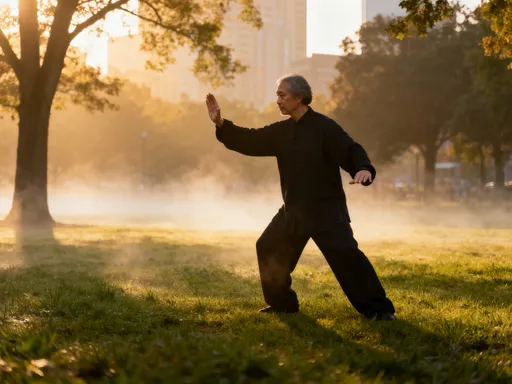
These ancient practices, rooted in TCM, are designed to cultivate and circulate Qi through slow, intentional movements coordinated with breath. Unlike fast-paced workouts that stress the body, Qi Gong and Tai Chi emphasize relaxation, alignment, and flow. My first session was humbling—simple arm raises and weight shifts felt unfamiliar, even challenging. But afterward, I noticed a quiet alertness, a sense of calm I hadn’t felt after years of gym sessions.
I started with just ten minutes each morning: gentle stretches, deep breathing, and slow, flowing motions. I focused on my breath—inhaling deeply into the lower abdomen, exhaling slowly to release tension. Over time, I added a short Tai Chi routine, practicing in the backyard as the sun rose. The movements weren’t about burning calories; they were about reconnecting with my body’s natural rhythm. I began to feel Qi—not as a mystical force, but as a subtle sensation of warmth, tingling, or lightness in my hands and torso.
Beyond formal practice, I integrated gentle movement into daily life. I took a 15-minute walk after lunch, not to burn food, but to stimulate digestion and clear mental fog. I avoided sitting for long stretches, standing up to stretch every hour. I also stopped skipping rest days, honoring my body’s need for recovery. These changes didn’t build muscle or shrink my waistline overnight, but they restored my energy. I stopped dreading movement and began looking forward to it as a daily reset. In TCM, stagnant Qi leads to fatigue and emotional blockages. By moving gently and consistently, I kept my energy flowing—and my mood stabilized as a result.
Daily Rhythms and Body Clocks: Syncing With Natural Cycles
Another eye-opening concept in TCM is the organ clock—a 24-hour cycle that maps energy flow through the body’s organ systems. Each organ is said to be most active during a two-hour window, influencing physical and emotional functions. For example, the liver’s peak time is between 1 a.m. and 3 a.m., a period associated with detoxification and emotional processing. If I was waking up during those hours, TCM suggested my liver Qi might be stagnant, often due to stress or poor sleep hygiene.
This framework helped me make sense of my energy patterns. I realized I was working late into the night, when TCM teaches that the body should be winding down. The hours between 9 p.m. and 11 p.m. are governed by the triple burner, which regulates fluid balance and prepares the body for rest. By scrolling through emails or watching TV during this time, I was disrupting my natural transition into sleep. I also ate dinner late, which meant my stomach was still active when it should have been resting.
I began adjusting my daily rhythm to align with these cycles. I set a goal to finish dinner by 7 p.m. and avoid heavy meals afterward. By 9 p.m., I turned off bright lights, put away my phone, and started a quiet routine—reading, sipping herbal tea, or doing light stretching. I aimed to be in bed by 10:30 p.m., so I could be asleep before 11 p.m., supporting liver detoxification and deep rest. At first, it felt restrictive, but within weeks, I fell asleep faster and woke up more refreshed.
During the day, I scheduled demanding tasks for mid-morning, when the spleen and stomach Qi are strong and digestion is optimal. I reserved afternoons for lighter work, knowing that energy naturally dips after lunch. I also paid attention to the lung’s active period (3 a.m. to 5 a.m.), a time linked to grief and letting go. On mornings when I woke early with sadness or anxiety, I didn’t suppress it—I used breathwork or journaling to process emotions, honoring the body’s natural rhythms. Over time, this alignment brought a new sense of stability. I wasn’t fighting my energy; I was working with it.
Mind-Body Connection: Calming the Shen (Spirit) for Deeper Rest
In TCM, the mind and body are not separate. Emotional health is physical health, and vice versa. One of the most profound teachings I encountered was the concept of the Shen—the spirit or mind—which resides in the heart. When the Shen is calm, we sleep well, think clearly, and respond to life with balance. When it’s disturbed, we experience insomnia, anxiety, and emotional volatility. My years of stress, irregular routines, and poor sleep had agitated my Shen, leaving me mentally scattered and emotionally reactive.
To calm the Shen, I adopted simple, TCM-inspired practices. Each evening, I spent five minutes on guided breathwork—focusing on slow, deep inhales and long exhales to activate the parasympathetic nervous system. I also began journaling, writing down thoughts before bed to “empty” my mind. Sometimes, I applied gentle acupressure to calming points, like the inner wrist (Pericardium 6) or the space between the eyebrows (Yintang), which helped quiet mental chatter.
These practices didn’t erase stress, but they created space between stimulus and response. I noticed I was less reactive—when a child spilled milk or a deadline loomed, I paused before reacting. My sleep improved dramatically. I fell asleep within 15 minutes instead of lying awake for hours. I woke up less during the night and felt more alert in the morning. Even my dreams became less chaotic, more coherent.
What I appreciated most was that TCM didn’t pathologize emotions. Anger, sadness, worry—these are natural, but when excessive or unexpressed, they disrupt organ function. For example, chronic worry affects the spleen, while repressed anger impacts the liver. By acknowledging and processing emotions through breath, movement, and rest, I supported my organs and restored balance. This holistic view helped me stop seeing myself as broken and start seeing myself as a system in need of gentle care.
Making It Stick: Building a Sustainable TCM-Inspired Routine
The biggest challenge wasn’t learning TCM principles—it was making them part of daily life. I didn’t want to adopt a rigid, complicated regimen. Instead, I focused on small, sustainable changes that fit my routine. I created a simple checklist: warm breakfast, midday walk, early dinner, evening wind-down, and consistent bedtime. I didn’t aim for perfection. Some days, I skipped Qi Gong or ate later than planned. But over time, the consistency of small choices made a difference.
I also learned to track subtle shifts. Instead of waiting for dramatic weight loss or superhuman energy, I noticed quieter improvements: better digestion, fewer mood swings, deeper sleep, and a greater sense of calm. These weren’t flashy results, but they were real. I also sought guidance from a licensed TCM practitioner, who helped tailor recommendations to my constitution. This was crucial—what works for one person may not work for another. TCM is highly individualized, based on pulse diagnosis, tongue examination, and health history.
Today, my routine feels natural, not forced. I start the day with warm water and a nourishing breakfast. I move gently, eat mindfully, and rest with intention. I still face stress and busy seasons, but I recover faster. I’ve learned to listen to my body—to rest when tired, to eat when hungry, to pause when overwhelmed. This isn’t about following trends or achieving perfection. It’s about returning to a slower, wiser way of living—one that honors the body’s innate intelligence.
This journey wasn’t about chasing wellness trends—it was about returning to a slower, wiser way of living. By embracing TCM’s gentle adjustments, I didn’t just feel better; I learned how to listen to my body again. It’s not a cure, but a lifelong practice of showing up for yourself, one mindful choice at a time.